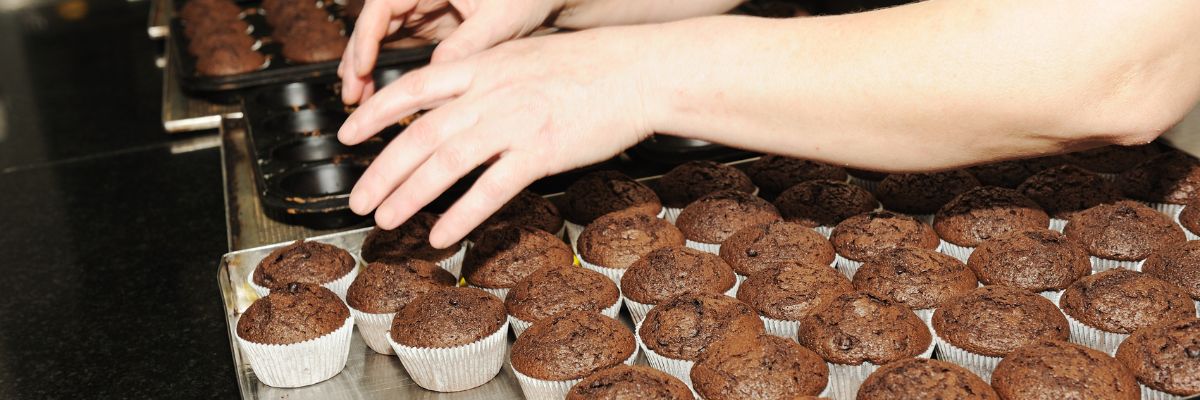
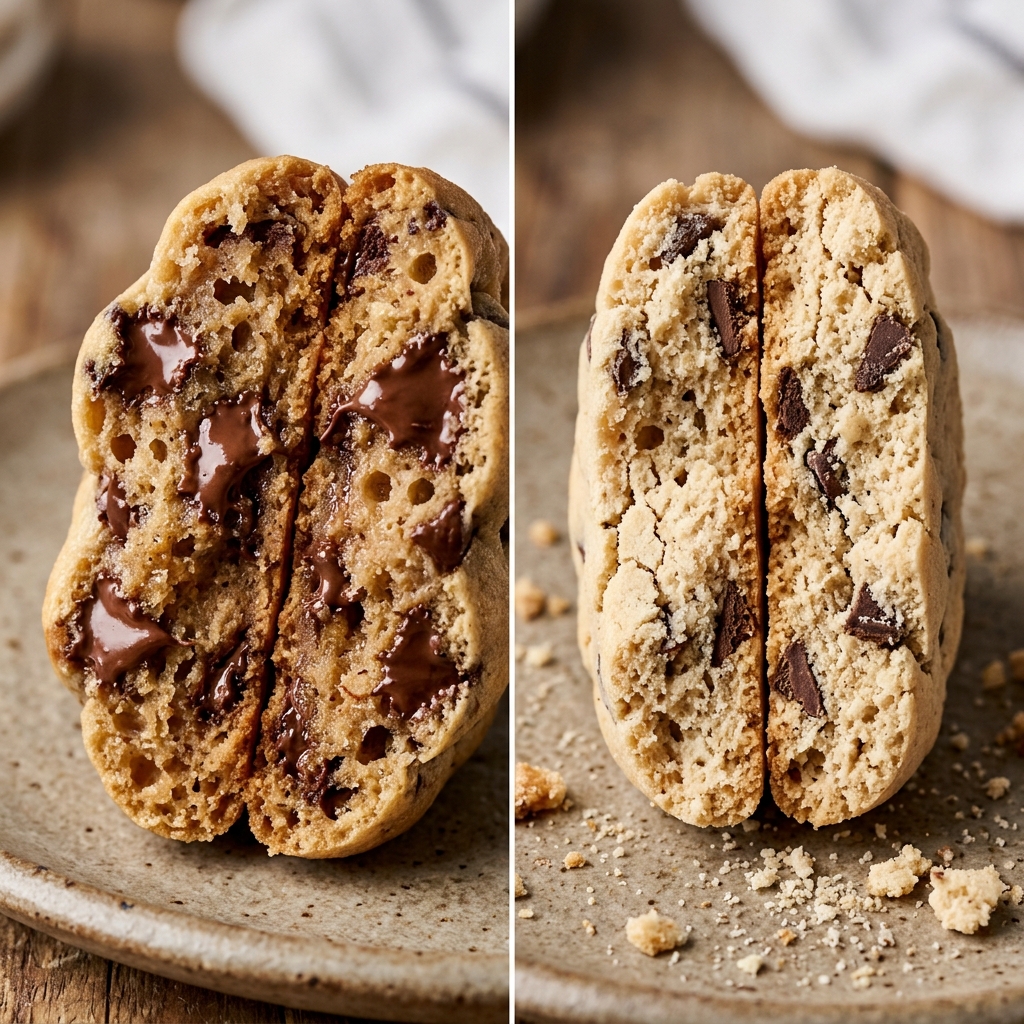
A technical guide to moisture migration, operational staling challenges, and natural date-based texturing solutions for automated food production lines.
The commercial food manufacturing industry is undergoing the most aggressive formulation shift in its history. Consumers are demanding absolute transparency, forcing legacy brands to strip synthetic emulsifiers, artificial humectants, and chemical dough conditioners from their ingredient declarations. But removing these stabilizing chemicals creates a massive structural vacuum. Unbound water accelerates staling, crumb elasticity collapses, and products that leave the factory perfectly soft arrive at the retailer as dry, friable bricks.
This comprehensive technical guide explores the hidden mechanics of moisture migration, the catastrophic operational cost of batch variance on high-speed factory lines, and the ultimate natural solution. Discover how engineering natural date and nut matrices to precise industrial specifications delivers the premium, moist mouthfeel your consumers demand, with the absolute mechanical predictability your automated factory requires.
Creating a perfect, highly elastic clean-label prototype in a small R&D kitchen is a relatively straightforward task. A food scientist can carefully monitor a small batch, pull it from a convection oven at the exact right moment, and present a phenomenal product to the executive board. However, the true test of a commercial formulation does not happen on Day 1 in a temperature-controlled laboratory. It happens on Day 14, in the back of a vibrating delivery truck, or on Day 30 on a fluctuating retail shelf.
The greatest enemy of any commercial baked good, whether it is a high-protein functional nutrition bar, a packaged muffin, or a soft-baked cookie, is the natural thermodynamic movement of unbound water.
In a freshly baked product, moisture is initially distributed evenly throughout the internal crumb structure, providing that soft, luxurious bite that consumers associate with freshness. However, nature always seeks equilibrium. Over time, the water inside the soft, moist center of the baked good begins to migrate outward along a vapor pressure gradient toward the drier crust. Eventually, this moisture completely escapes the product and evaporates into the surrounding packaging or ambient air. In food science, this dynamic is measured as Water Activity (aw).
For decades, industrial bakeries solved this problem by injecting chemical humectants into their dough. Synthetic ingredients like artificial sorbitol, propylene glycol, and synthetic glycerine acted as microscopic chemical sponges. They aggressively bound themselves to the water molecules, physically trapping them in place so they could not migrate, regardless of ambient temperature or shelf time.
When a brand mandate dictates the removal of these chemical humectants to achieve a "clean label," that water is suddenly free to move. The moment that unbound water begins to escape, a devastating, irreversible chain reaction occurs within the product matrix.
First, as the water leaves the center of the baked good, the natural starches in the flour—specifically the amylose and amylopectin molecules—begin to rapidly recrystallize and harden. This process, known scientifically as starch retrogradation, is the primary biological cause of staling.
Second, the product loses its structural integrity. Water acts as a natural plasticizer; it is the lubricating agent that gives cellular dough walls their flexibility. Without it, the internal architecture becomes brittle. When the product is shipped, the mechanical vibrations and kinetic stress of the supply chain cause the dry product to crack and shatter inside the wrapper.
By the time the clean-label product reaches the consumer, it has transformed from a premium snack into a dry, chalky, crumbly disaster. The brand may have successfully achieved its marketing goal of a clean ingredient list, but by delivering an experience that tastes like cardboard, they entirely sacrifice the repeat purchase.
The challenge of modern clean-label manufacturing is not merely removing chemicals; it is finding a way to replicate the immense mechanical holding power of those chemicals using 100% natural ingredients. To replace the performance of a synthetic surfactant or artificial humectant, formulators must engineer an alternative structural network using native plant polymers, soluble fibers, and natural lipids.
At Sarika Ventures, we do not view dates and nuts merely as agricultural commodities or natural sweeteners. We view them as highly complex, natively engineered structural solutions.
When formulated correctly into a bakery dough or protein bar mass, the unique matrix of invert sugars (glucose and fructose) and soluble fibers found in high-quality dates acts as nature's ultimate humectant. The hydroxyl groups in the date sugars form incredibly stable hydrogen bonds with the ambient water molecules in your recipe. This natively traps the water in place, safely lowering the water activity (aw) and delaying starch crystallization without requiring a single chemical additive.
Below is the technical translation matrix detailing exactly how natural macromolecules substitute legacy chemical additives on the commercial factory floor.
| Target Mechanical Function | Legacy Chemical Additive | Natural Macromolecular Substitute |
|---|---|---|
| Moisture Kinetics & Humectancy | Sorbitol / Synthetic Glycerol / High-Fructose Corn Syrup |
Concentrated Date Paste Matrices
High-density invert sugars form stable hydrogen bonds with ambient water, safely lowering water activity (aw) and preventing moisture migration. |
| Retrogradation Retardation (Anti-Staling) | Distilled Monoglycerides (DMG) |
Native Date Seed Fibers
Insoluble hemicellulose and pectin networks physically intercept amylose chains, mechanically disrupting the crystal lattice formation that causes staling. |
| Interfacial Tension Reduction | DATEM / Sodium Stearoyl Lactylate (SSL) |
Functional Nut Fractions
Native polar lipids and globulin proteins align at the oil-water interface, stabilizing gas cell walls during high-shear mixing and proofing. |
| Crumb Plasticization | Partially Hydrogenated Oils (Trans Fats) |
Cold-Pressed Nut Oils
Low-melting-point natural triacylglycerols coat starch granules, reducing friction during mastication and delivering a premium mouthfeel. |
While mastering the molecular science of moisture retention is critical, it is only half of the clean-label equation. The second, and often most expensive, hurdle occurs directly on the factory floor.
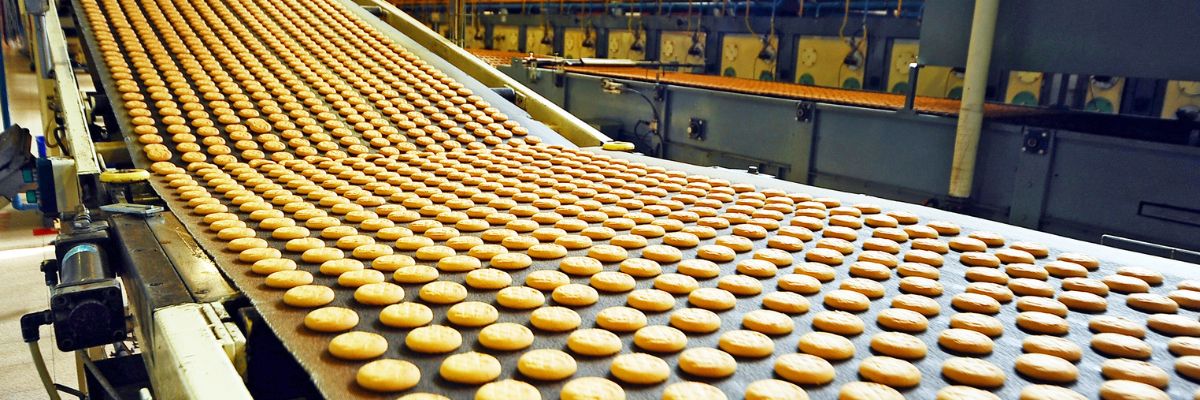
Transitioning a clean-label texturizer from a 2-kilo bench trial to a 5-ton continuous commercial production line introduces severe operational constraints. High-volume automated machinery, such as continuous extruders, progressive cavity pumps, and wire-cut depositors, are engineered to operate with mathematical precision. These machines are incredibly unforgiving.
Legacy synthetic syrups and chemical emulsifiers are popular among procurement heads and factory managers because they are perfectly uniform. A barrel of synthetic glycerine will have the exact same viscosity in January as it does in July. Agricultural products, by their very nature, do not behave this way. They inherently vary. A batch of raw, unprocessed dates harvested in one region may have a vastly different moisture content, fiber density, and physical stickiness than a batch harvested a month later.
When a factory attempts to run standard, unstandardized natural pastes through high-speed automation, the results are catastrophic.
If a natural paste is too fibrous, too dense, or too sticky, it exhibits non-Newtonian, shear-thickening behavior. This creates massive back-pressure inside the manifolds of the pumping systems. The automated nozzles that deposit the dough onto the baking belts begin to "tail" or clog entirely, causing irregular product weights, misshapen units, and massive packaging errors downstream.
When a depositor clogs, the entire production line must be halted. Factory workers must manually lock out the machinery, disassemble the piping, clean out the sticky natural residue, and recalibrate the system. In high-volume FMCG manufacturing, Overall Equipment Effectiveness (OEE) is the most critical metric. A single hour of unexpected line downtime can cost tens of thousands of dollars in lost yield and wasted labor, and blown delivery schedules.
This operational nightmare is exactly why you cannot run a modern, automated enterprise business using unpredictable agricultural leftovers.
At Sarika Ventures, we believe that adopting natural ingredients should never compromise your operational efficiency. Before our date products ever reach your factory floor, they undergo rigorous, pharmaceutical-grade physical standardization. We engineer our natural date matrices to exact, custom-tailored physical specifications.
We lock in the precise moisture equilibrium limits. We mill our products to exact particle size maximums to ensure flawless flowability. We standardize the viscosity so that our natural pastes behave identically to synthetic syrups under high mechanical shear. When you load our clean-label date texturizers into your automated dosing systems, Batch 100 will flow through your continuous extruders and wire-cut depositors with the exact same frictionless perfection as Batch 1.
We eliminate the batch variance, we protect your profit margins, and we ensure your production lines never stop moving.
Solving the immediate texture and machinery challenges with highly standardized date pastes is only the foundation of our commitment to the FMCG sector. As the global food industry moves rapidly toward lights-out, total automation, the physical format of raw ingredients must evolve alongside the machinery. Handling high-viscosity liquids or pastes at an industrial scale still requires specialized pumping equipment, heated jacketing, and regular manual sanitation cycles. The ultimate goal for the world’s largest corporate food manufacturers is complete dry-line automation—where every ingredient can be stored in massive silos and automatically dosed as a free-flowing powder with zero human intervention.
To meet this enterprise demand, Sarika Ventures is actively building the future of automated clean-label processing. Our operational infrastructure roadmap is designed to transition your formulations from highly functional pastes to flawless, automated powders.
This is our current, uncompromising operational standard. We provide the industry’s most reliable, highly standardized date pastes and natural humectants. By enforcing strict tolerances on Brix levels, moisture content, and particle size distribution, we eliminate supply-chain ambiguity. We guarantee that our products will integrate seamlessly into your current wet-dosing lines, acting as a drop-in natural replacement for synthetic syrups without causing a single moment of mechanical clogging or line interruption.
As we scale our processing capabilities, we are introducing targeted refinement techniques directly at the processing level. By utilizing clean, food-grade enzymatic processes (such as the application of natural cellulases and amylases), we can break down the complex, native polysaccharides of the date. This allows us to create highly concentrated, ultra-smooth matrices that offer maximum moisture retention while drastically reducing the natural color impact. This phase is specifically designed for formulators working with delicate baked goods, such as premium vanilla sponges or white breads, where a dark fruit paste would disrupt the visual aesthetic.
The crown jewel of our enterprise expansion roadmap is the development of a state-of-the-art dry-powder manufacturing plant. Utilizing advanced industrial spray-drying and fluid-bed granulation technology, this facility will transform our functional date and nut matrices into 100% free-flowing, anti-caking natural powders. Imagine the immense binding power, sugar-reduction capabilities, and moisture retention of natural dates, delivered in a dry, perfectly granulated format. This massive infrastructural leap will allow global food brands to drop our clean-label texturizers directly into automatic dry-mix dosing silos. It represents the ultimate convergence of natural food science and absolute factory floor automation.
The transition to a clean-label bakery portfolio does not have to be a blind compromise between consumer marketing demands and factory floor efficiency. You do not have to accept staling products on the retail shelf, and you do not have to accept clogged machinery on your production lines.
By utilizing engineered, custom-spec natural date matrices, you can lock in your moisture, extend your shelf life naturally, and scale your production with the exact predictability of legacy chemical additives.
Stop fighting the formulation, and stop accepting batch variance from standard agricultural suppliers.