The “Sugar and Cancer” Myth: Unpacking the Science of Metabolism and Oncology
If you type “cancer diet” into any search engine, you will inevitably be met with one pervasive, terrifying rule: Sugar and cancer.
It is a statement that has spawned thousands of diet books, completely reshaped consumer buying habits, and struck fear into the hearts of patients globally. In the consumer packaged goods (CPG) and food tech industries, this fear has fueled a multi-billion-dollar race to formulate “Zero Sugar” products at any cost.
But as food founders, R&D professionals, and health-conscious consumers, we have a responsibility to separate biological fact from wellness-industry fiction.
Does sugar actually feed cancer?
The short answer is: No, not in the direct, mechanical way the myth suggests. But the long answer—the real science behind how sugar, insulin, and metabolism interact with cellular growth—is far more fascinating, and far more critical for the future of food formulation.
It is time to stop fearing sugar and start understanding it. Here is the definitive guide to sugar, cancer risk, and why the food industry must pivot to a #SmarterSugar approach.
Part 1: The Origin of the Myth (And the Biology of Glucose)
To understand why the “sugar and cancer” myth is so persistent, we have to look at a grain of truth discovered over a century ago.
The Warburg Effect
In the 1920s, a German biochemist named Otto Warburg observed something highly unusual about cancer cells. Normal, healthy human cells generate energy using a process called oxidative phosphorylation, which requires oxygen. But Warburg noticed that cancer cells preferred to generate energy through a less efficient process called glycolysis (the fermentation of glucose)—even when plenty of oxygen was available.
This phenomenon became known as the Warburg Effect. Because glycolysis is inefficient, cancer cells must consume enormous amounts of glucose to keep up with their rapid, uncontrolled growth.
The PET Scan Proof
Modern medicine leverages this exact biological quirk. When an oncologist wants to locate a tumor or see if cancer has spread, they often use a PET (Positron Emission Tomography) scan. The patient is injected with a radioactive form of glucose (fluorodeoxyglucose, or FDG). Because cancer cells consume glucose so rapidly, they absorb the radioactive tracer faster than normal cells, causing the tumor to “light up” brightly on the scan.
The Fatal Flaw in the Logic
When people hear about the Warburg Effect and PET scans, the logical leap seems obvious: If cancer cells gorge on sugar, then eating sugar makes them grow, and stopping sugar will starve them.
But human biology is not a simple arithmetic equation.
All the cells in your body—especially your brain, liver, and muscles—rely on glucose for energy. If you completely remove dietary carbohydrates and sugar from your diet, you do not “starve” the cancer cells. You simply trigger a biological backup system.
Through a process called gluconeogenesis, your liver will begin manufacturing its own glucose out of amino acids (proteins) and glycerol (fats) to keep your brain and body functioning. The cancer cells will simply steal that glucose. You cannot starve a tumor of glucose without starving the host.
Part 2: The Real Danger is the Metabolic Ripple Effect
If sugar doesn’t directly feed cancer like throwing wood on a fire, does that mean we can eat as much of it as we want? Absolutely not.
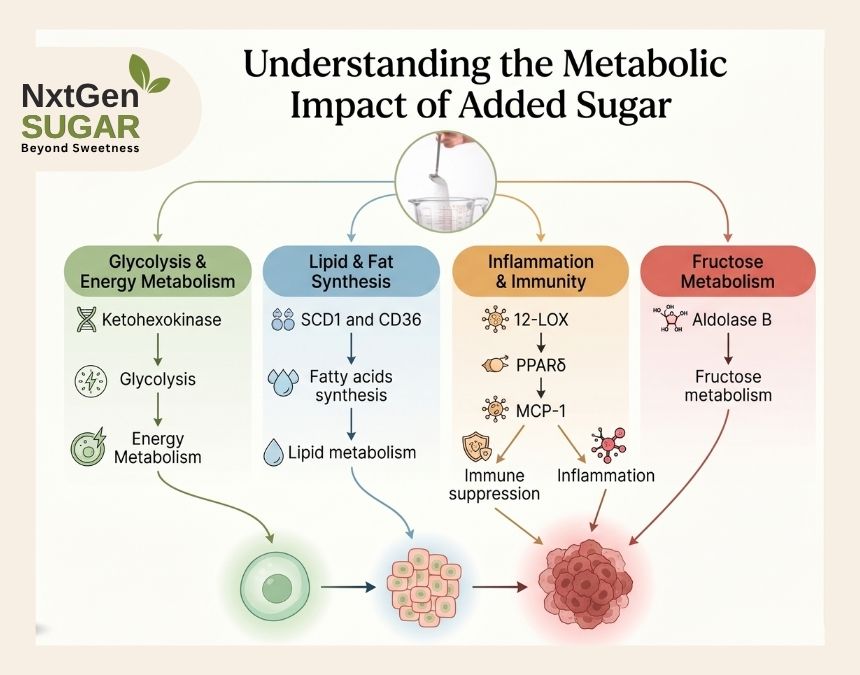
The danger of sugar is not the molecule itself; it is the metabolic chaos that excess sugar creates in the body. When we consume high amounts of refined, added sugars, we set off a physiological chain reaction that creates the perfect microenvironment for cancer to thrive.
Here is how the “ripple effect” actually works:
1. Chronic Insulin Spikes and IGF-1
When you eat a high load of refined carbohydrates or liquid sugar, your blood glucose spikes. In response, your pancreas pumps out a massive wave of insulin to shuttle that glucose into your cells.
If this happens occasionally, it’s harmless. But if you consume excess sugar chronically, your cells become numb to insulin (Insulin Resistance). Your pancreas has to pump out more and more insulin just to get the same job done, leading to chronically high insulin levels in the blood (hyperinsulinemia).
Here is where the cancer link solidifies: Insulin is an anabolic (growth) hormone. Furthermore, high insulin levels stimulate the production of IGF-1 (Insulin-like Growth Factor 1). Both insulin and IGF-1 send aggressive “grow and multiply” signals to cells, and they actively inhibit apoptosis (the programmed death of damaged cells). Elevated insulin and IGF-1 levels create a highly favorable environment for tumor development and progression.
2. Obesity and Adipose Tissue
High-sugar diets are deeply linked to excess caloric intake and weight gain. But the medical community’s understanding of body fat has evolved drastically.
Visceral fat (the fat stored around your organs) is not just inert stored energy. It is an active endocrine organ. Excess fat tissue constantly secretes hormones and inflammatory proteins called cytokines.
3. Chronic Systemic Inflammation
The combination of visceral fat and high blood sugar leads to chronic, low-grade systemic inflammation. In oncology, inflammation is widely recognized as a tumor promoter. It causes DNA damage, encourages the formation of new blood vessels to supply tumors (angiogenesis), and suppresses the immune system’s ability to hunt down and destroy rogue cancer cells.
The Verdict: Sugar does not directly mutate a cell into cancer. However, a diet high in refined sugar causes obesity, insulin resistance, and inflammation—which act as the rich, fertile soil in which cancer seeds can rapidly grow.
Part 3: The Danger of the “Zero-Sugar” Extreme
Once the public caught wind of the dangers of insulin resistance, the pendulum swung violently in the opposite direction. The wellness industry began demonizing all forms of sugar, leading to extreme diets that strictly forbid fruit, root vegetables, and whole grains.
From a nutritional and food-science perspective, this is a catastrophic overcorrection.
Losing the Anti-Cancer Arsenal
When we tell consumers to avoid all sugar, they stop eating apples, berries, sweet potatoes, and carrots. They lose out on nature’s most potent anti-cancer compounds:
-
Phytochemicals & Antioxidants: Compounds in fruits and vegetables that neutralize DNA-damaging free radicals.
-
Dietary Fiber: Essential for feeding the gut microbiome. A healthy microbiome regulates the immune system, reduces systemic inflammation, and binds to toxins in the digestive tract.
-
Micronutrients: Essential vitamins and minerals required for optimal cellular repair.
The Food Industry’s Failure
The CPG industry responded to the “Zero Sugar” craze by engineering highly processed franken-foods. We removed the sugar, but we replaced it with cocktails of artificial sweeteners, synthetic sugar alcohols, and artificial gums.
We solved the caloric problem but created a new one. Many artificial sweeteners disrupt the gut microbiome—which, ironically, can lead to glucose intolerance and insulin resistance. We forced consumers to eat heavily processed foods under the guise of “health.”
We didn’t solve the metabolic crisis; we just put a different label on it.
Part 4: The Shift to “Smarter Sugar” (The NxtGenSugar Philosophy)
If extreme high-sugar diets drive metabolic disease, and extreme zero-sugar diets sacrifice nutrition and sensory experience, what is the path forward?
The future of the food industry belongs to Smarter Sugar.
At NxtGenSugar, we believe that better health isn’t built on restriction; it’s built on functional formulation. As food entrepreneurs and innovators, our job is not to trick the consumer’s palate, but to design foods that respect human biology.
Here is how the next generation of food tech must approach formulation:
1. Respecting the Food Matrix
A molecule of fructose in an apple behaves entirely differently in the human body than a molecule of fructose in high-fructose corn syrup. Why? Because of the food matrix. In the apple, the sugar is bound in cellular walls of fiber, accompanied by water and micronutrients. It digests slowly, leading to a gentle, manageable rise in blood sugar.
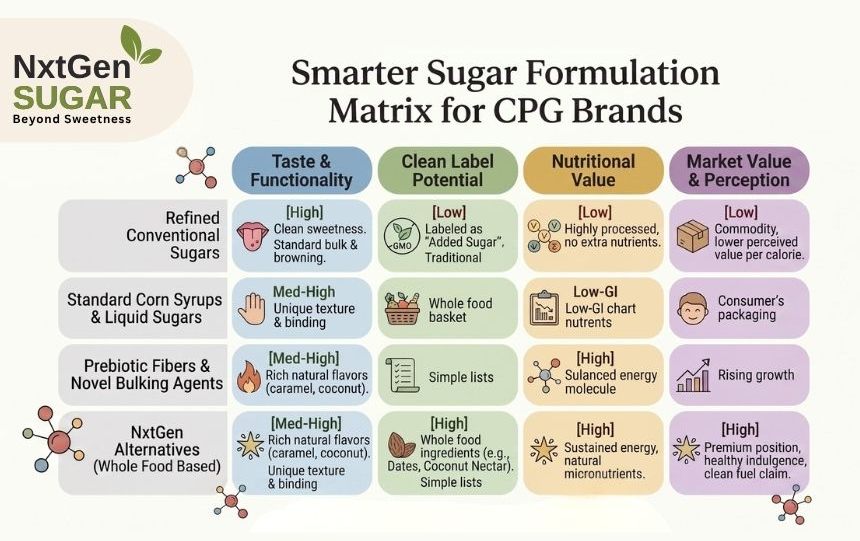
When formulating CPG products, we must recreate this matrix. If we use natural sweeteners, we must pair them with robust soluble and insoluble fibers to blunt the glycemic impact.
2. Formulating for Glycemic Control, Not Just Caloric Deficits
The goal of a modern food product should not be “zero calories.” The goal should be Blood Sugar Balance. R&D teams must focus on the glycemic load of their products. By intelligently blending whole-food carbohydrates with adequate protein and healthy fats, we can formulate snacks, beverages, and meals that provide sustained energy without the devastating insulin spikes that drive metabolic dysfunction.
3. Embracing Natural, Functional Sweeteners
The era of synthetic, chemical-tasting sweeteners is ending. Smarter formulation means utilizing nature’s alternatives thoughtfully. Ingredients like Allulose (a rare sugar that doesn’t spike insulin), Monk Fruit, and Stevia can be utilized—but they must be balanced harmoniously so they do not cause gastrointestinal distress or leave bitter off-notes.
Furthermore, we must embrace ingredients that offer functional benefits, like prebiotic fibers (such as chicory root or agave inulin) that provide bulk, a touch of sweetness, and actively feed a healthy gut microbiome.
Part 5: Actionable Takeaways for the Future
Whether you are a consumer trying to optimize your health or a founder trying to build the next great food brand, the rules of engagement have changed.
For the Health-Conscious Consumer:
-
Stop Fearing Whole Foods: Do not restrict whole fruits, vegetables, or legumes. The fiber and antioxidants they contain are your greatest defense against metabolic disease.
-
Hunt for “Hidden” Added Sugars: Your focus should be on eliminating ultra-processed foods. Check the labels of your sauces, dressings, breads, and oatmeals for high-fructose corn syrup, cane juice, and maltodextrin.
-
Dress Your Carbs: Never eat carbohydrates completely naked. If you have fruit or a sweet treat, pair it with a fat or a protein (like a handful of almonds or Greek yogurt) to slow gastric emptying and keep your blood sugar steady.
For Food Entrepreneurs and CPG Brands:
-
Stop the “Zero” Gimmick: Consumers are suffering from label fatigue. Stop chasing absolute zero if it means making your product taste like a chemical experiment.
-
Prioritize the Glycemic Curve: Invest in continuous glucose monitoring (CGM) testing for your prototypes. Prove that your product respects the body’s insulin response.
-
Clean, Transparent Labels: Formulate with ingredients that a consumer can recognize. Leverage functional fibers and natural flavor modulators to reduce sugar naturally without ruining texture and mouthfeel.
TLDR: Designing the Future of Food
The myth that “sugar and cancer” directly is a profound misunderstanding of human biology. But it highlights a very real, very urgent crisis: our modern, highly processed food environment is driving a pandemic of metabolic dysfunction.
For decades, the food industry’s only answer to this crisis has been restriction and synthetic substitution. It hasn’t worked.
At NxtGenSugar, we know that the future is not sugar-free. It is highly functional, uncompromisingly delicious, and biologically responsible. We don’t need to eliminate sugar. We need to evolve it.
Welcome to the era of Smarter Sugar. Let’s build better food, together.
FAQs
Does sugar cause cancer? Sugar does not directly cause cancer or mutate cells. However, excessive added sugar intake is linked to obesity, insulin resistance, and chronic inflammation, all of which significantly increase sugar and cancer risk.
What is the Warburg Effect? The Warburg Effect is a phenomenon where cancer cells consume glucose at a much higher rate than normal cells to support rapid growth. While this is used in PET scans to identify tumors, it does not mean that dietary sugar restriction can “starve” cancer.
What are the best sweeteners for a cancer-preventative diet? From a food tech perspective, the best sweeteners are those that do not cause insulin spikes. Rare sugars like Allulose and natural extracts like Monk Fruit are excellent choices because they provide sweetness and functionality without driving the hyperinsulinemia associated with metabolic oncology issues.